Golden State Valkyries Defense: Breaking the WNBA Expansion Playbook
 Pickviz
7 min read
Pickviz
7 min read
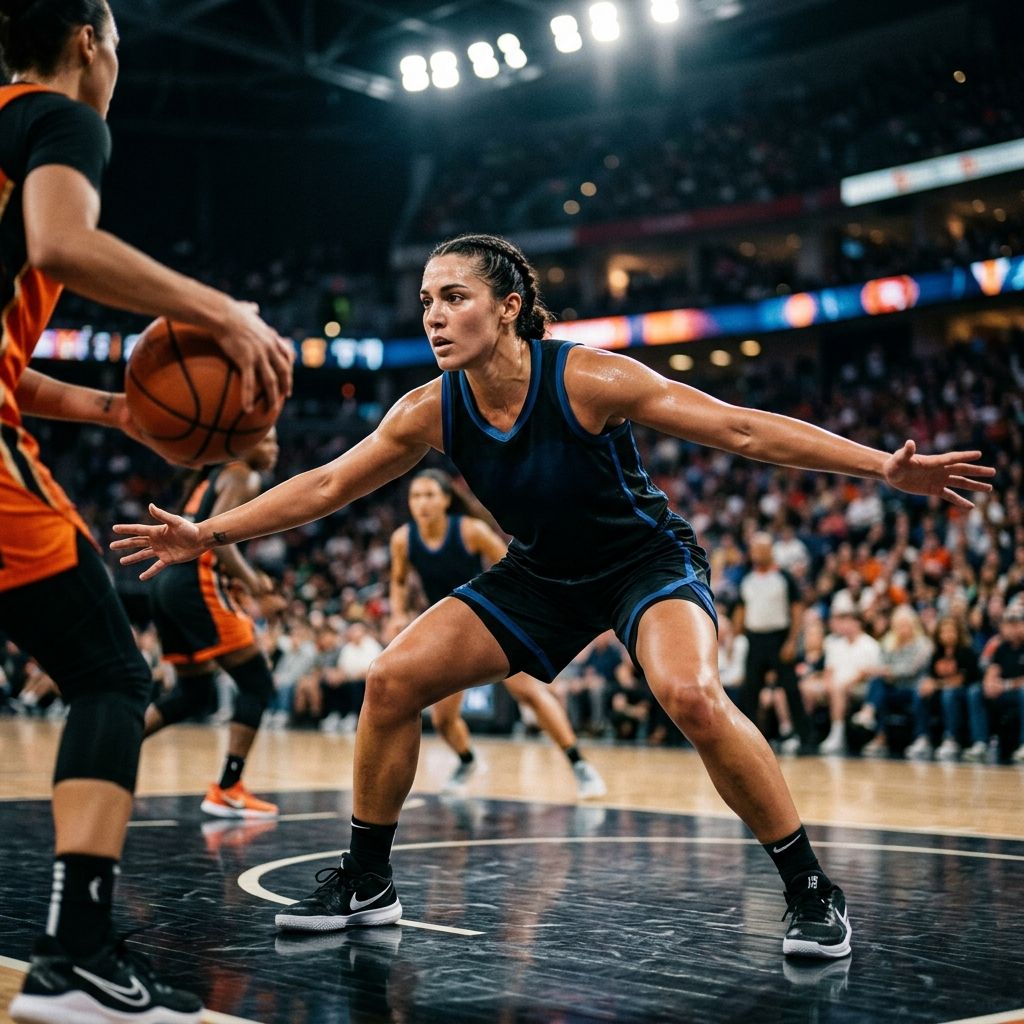
The Golden State Valkyries Defense Is Breaking the WNBA Expansion Playbook
The Golden State Valkyries are 18-7 and own the best defensive rating in the WNBA. That sentence should not exist. Second-year expansion teams do not lead professional basketball leagues in anything except lottery odds. Yet here sits Natalie Nakase’s roster at the midseason mark: 100.2 defensive rating, 76.1 opponent points per game, both figures the best among all 15 teams. The Golden State Valkyries defense isn’t just a feel-good expansion narrative — it’s the most structurally unusual defensive build in the modern WNBA.
What makes it unusual isn’t the talent. It’s the philosophy: play the slowest pace in the league, force every opponent into your rhythm, and protect the paint so thoroughly that perimeter defenders can gamble on steals without fear of giving up layups. It works. And nobody else in the league is copying it.
How Slow Is Slow? The Pace Numbers Are Extreme
The Valkyries play at a pace of 75.2 possessions per game. That is dead last among all 15 WNBA teams. For context, the Minnesota Lynx — the team directly ahead of them in the standings at 19-6 — play roughly 5 possessions per game faster. Five possessions is an entire extra quarter’s worth of opportunities over the course of a week.
Most coaching staffs treat slow pace as a concession: you play slow because you lack the athletes to run. Nakase treats it as a weapon. By dragging the game into the mud, she removes transition opportunities, forces opponents into half-court sets, and makes every possession high-stakes. Teams that rely on tempo — Indiana’s Caitlin Clark-led offense, the up-tempo New York Liberty — consistently struggle against Golden State because they never get to play their game.
| Category | Golden State Valkyries | League Rank (of 15) |
|---|---|---|
| Defensive Rating | 100.2 | 1st |
| Opp. Points Per Game | 76.1 | 1st |
| Net Rating | +8.1 | 2nd |
| Pace (Possessions/Game) | 75.2 | 15th (slowest) |
| Points Per Game | 82.2 | 12th |
| Record | 18-7 | 2nd |
Source: Basketball-Reference, as of July 17, 2026.
Look at that table and notice the paradox: they score the 12th-most points in a 15-team league, yet they have the second-best net rating. That gap — 12th in scoring, 1st in defense — tells you everything about how this team wins. They don’t outshoot you. They suffocate you.
“Disciplined Chaos” and the Kiah Stokes Anchor
Nakase’s scheme has earned the label “disciplined chaos” within her coaching staff. The concept is deceptively simple: play aggressive, help-heavy perimeter defense because you have a rim protector behind you who cleans up mistakes.
That rim protector is Kiah Stokes. Her role is not glamorous — she won’t make highlight reels — but she is the structural reason the entire system works. Stokes commands the defense verbally, calling out screen coverage and directing rotations, while serving as the last line of paint protection. With Stokes patrolling the interior, perimeter defenders like Gabby Williams (1.6 steals per game, among the league leaders) and Veronica Burton can play passing lanes aggressively. If they get beaten off the dribble, Stokes is there. If the gamble pays off, it’s a turnover and a transition bucket.

“The Valkyries effectively slowed the pace and disrupted our offensive flow.” — Indiana Fever guard Sophie Cunningham, after a July 2026 loss to Golden State.
This isn’t the Dallas Mavericks’ switch-everything approach or the defensive scheme du jour from the NBA. It’s throwback basketball — paint protection, communication, controlled tempo — executed with modern personnel who happen to be elite at it.
The Williams-Burton Backcourt: Defense Creates Their Offense
The Valkyries’ two All-Stars tell a revealing story about what this team values.
Gabby Williams averages 15.0 points, 3.5 rebounds, and 2.1 assists. She is the team’s leading scorer. But she was acquired from the Seattle Storm specifically for her two-way versatility: a wing defender who generates steals and converts them into transition points. Her career-high 29-point game against the Aces this season came largely off forced turnovers that she finished herself.
Veronica Burton averages 11.9 points and leads the team with 5.2 assists. She’s the franchise’s all-time leading scorer — a remarkable fact for a team that has existed for less than two full seasons — and won the 2025 Most Improved Player award. Burton’s value, though, is her assist-to-turnover discipline. She doesn’t force. She operates within the half-court at the tempo Nakase demands, finding cutters and spotting open shooters off the defensive scramble.
Neither player is a traditional offensive star. Neither averages 20 points. Neither needs to. The defense generates enough chaos — steals, shot-clock violations, contested misses — that 82.2 points per game is plenty to win when you’re holding opponents to 76.
Historical Context: This Has Never Happened Before
WNBA expansion teams are supposed to be bad. Here is the historical record:
- 1998 Washington Mystics: 3-27 in their debut season.
- 1998 Detroit Shock: 17-13, the previous expansion-win record. Missed the playoffs.
- 2025 Golden State Valkyries: 23 regular-season wins. First expansion team in WNBA history to make the playoffs. Broke the Shock’s win record in August 2025.
Now in Year Two, the Valkyries are on pace for roughly 37 wins across a 44-game season if they maintain their current .720 winning percentage. The 2025 team was a feel-good story. The 2026 team is a legitimate title contender, ranked third in the league in defensive rating last year and now first.
No WNBA expansion franchise has ever been better in Year Two than Year One while leading the league in a major statistical category. That alone makes what Nakase is building historically significant.
The Sustainability Question: Can Defense Carry a Title?
The obvious counterargument: defense-first teams in women’s basketball historically struggle in the playoffs when the game speeds up and referees swallow their whistles. If the Valkyries can’t score in the half-court against a set defense, a team like the Minnesota Lynx — who have both elite offense and strong defense — could expose them in a seven-game series.
This is a fair concern. Golden State’s 82.2 points per game ranks 12th in the league. They struggle when their defensive pressure doesn’t generate turnovers. And their slowest-in-the-league pace means they get fewer second chances when shots don’t fall.
But here’s the counterpoint: the 2026 Valkyries aren’t relying on a gimmick. Their defensive identity is structural, built around roster construction (Stokes’s rim protection, Williams’s perimeter defense, Burton’s ball security) rather than effort or scheme tricks that fade in the postseason. They were third in defensive rating last season and first now. The improvement suggests a system that is deepening, not a hot streak that will cool off.
Where PickViz Sees Value
At PickViz, we track defensive efficiency trends to identify line-movement opportunities before the betting market adjusts. The Valkyries’ defensive rating has been consistent across home and road splits — including a historic 5-0 road trip in July — which suggests the market may still be undervaluing their away performance. Visual models that overlay defensive rating against point spreads can reveal where the public is overweighting scoring averages and underweighting defensive ceiling.
The Real Takeaway
The Golden State Valkyries are not a Cinderella story. They are a proof of concept: you can build a contender from scratch in the modern WNBA by prioritizing defense, controlling pace, and constructing a roster around complementary two-way players rather than a single transcendent scorer. Natalie Nakase learned this system as an assistant under Becky Hammon in Las Vegas, and she’s executing it with a roster that costs a fraction of what the Aces or Liberty spend in salary.
Whether they win a title this October remains an open question. But the model — slowest pace, best defense, no superstar scorer, second-best record — is already the most compelling expansion-team blueprint in the history of the WNBA.
Frequently Asked Questions
Are the Golden State Valkyries really an expansion team?
Yes. The Valkyries entered the WNBA in 2025 as the league’s 14th franchise. They are currently in their second season. Their 2025 debut was the most successful expansion campaign in WNBA history, with 23 wins and the league’s first-ever expansion playoff berth.
Who is the Valkyries’ head coach?
Natalie Nakase, who previously served as an assistant coach with the Las Vegas Aces under Becky Hammon. Nakase is known for her “disciplined chaos” defensive philosophy and demanding coaching style.
What is defensive rating and why does it matter?
Defensive rating measures the number of points a team allows per 100 possessions. It adjusts for pace, which means a slow team like Golden State isn’t penalized for playing fewer possessions. A rating of 100.2 means the Valkyries allow roughly 100 points for every 100 opponent possessions — the best mark in the 2026 WNBA season.