Spain vs Argentina World Cup Final: The Tactical Collision the Data Predicted
 Pickviz
8 min read
Pickviz
8 min read
Spain vs Argentina World Cup Final: The Tactical Collision the Data Predicted
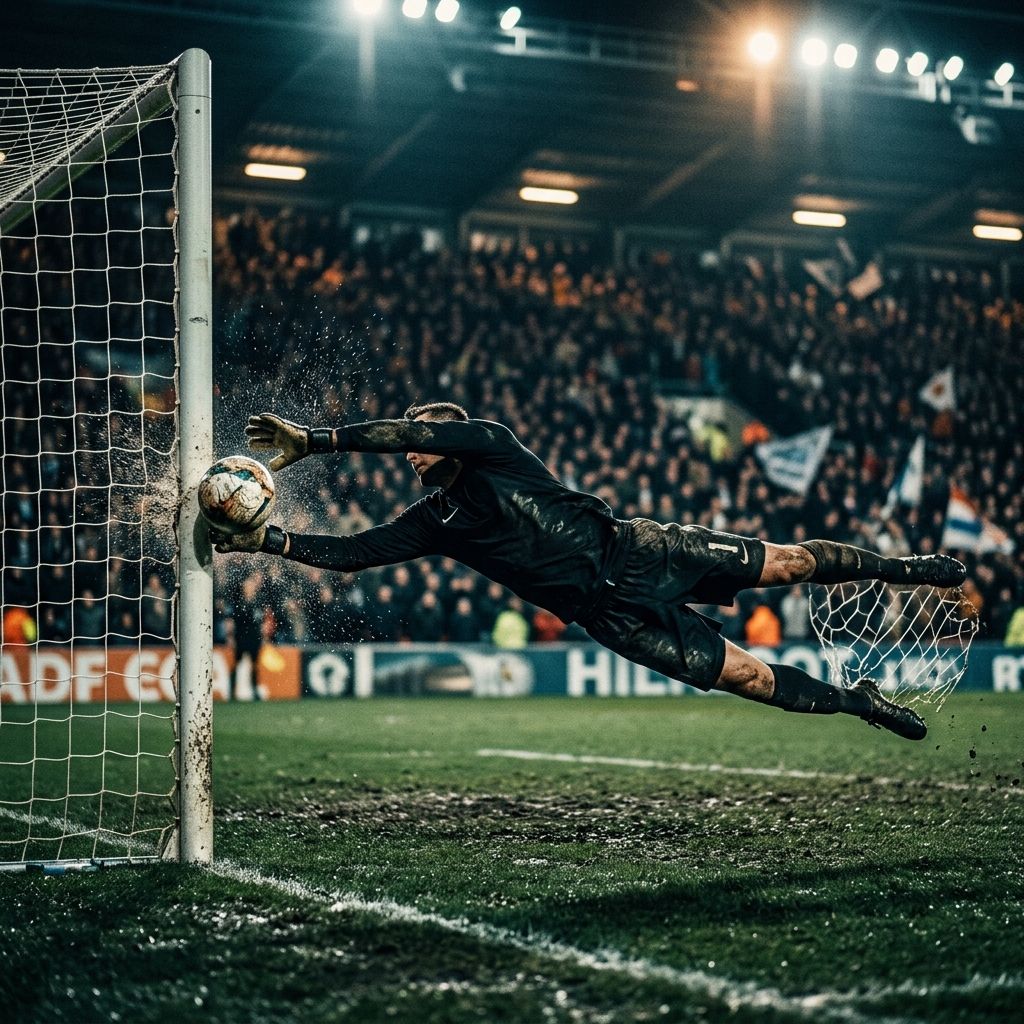
The numbers framing Sunday’s Spain vs Argentina World Cup Final don’t look like they belong in the same tournament. Spain has conceded one goal in seven matches. Argentina has scored 19. Spain’s goalkeeper holds the longest scoreless streak in World Cup history. Argentina’s forward holds every meaningful scoring record the tournament has to offer.
This is the most lopsided tactical mismatch in a men’s World Cup Final since at least 2002, and possibly ever — not because one team is better than the other, but because they are built to dominate on completely opposite axes. Spain’s tournament has been defined by defensive suffocation. Argentina’s has been defined by offensive devastation. Something has to break on Sunday at MetLife Stadium. The data suggests which side is more vulnerable than it appears.
Spain’s Defense: The Numbers Behind 1 Goal in 7 Matches
Start with what Spain’s defense has actually done, because the headline number barely captures it:
| Metric | Spain (2026 WC) | Context |
|---|---|---|
| Goals Conceded | 1 | Only vs. Belgium (QF, De Ketelaere, 41st min) |
| Clean Sheets | 6 | First team in WC history with 6 in one tournament |
| Unai Simón Scoreless Streak | 650 min | New World Cup record (prev: Zenga, 517 min, 1990) |
| Rodri — Completed Passes | 655 | Most by any player this tournament |
| Rodri — High-Intensity Runs | 919 | Most by any player this tournament |
Source: FIFA.com official tournament stats, BeSoccer, Gulf News, as of July 18, 2026.
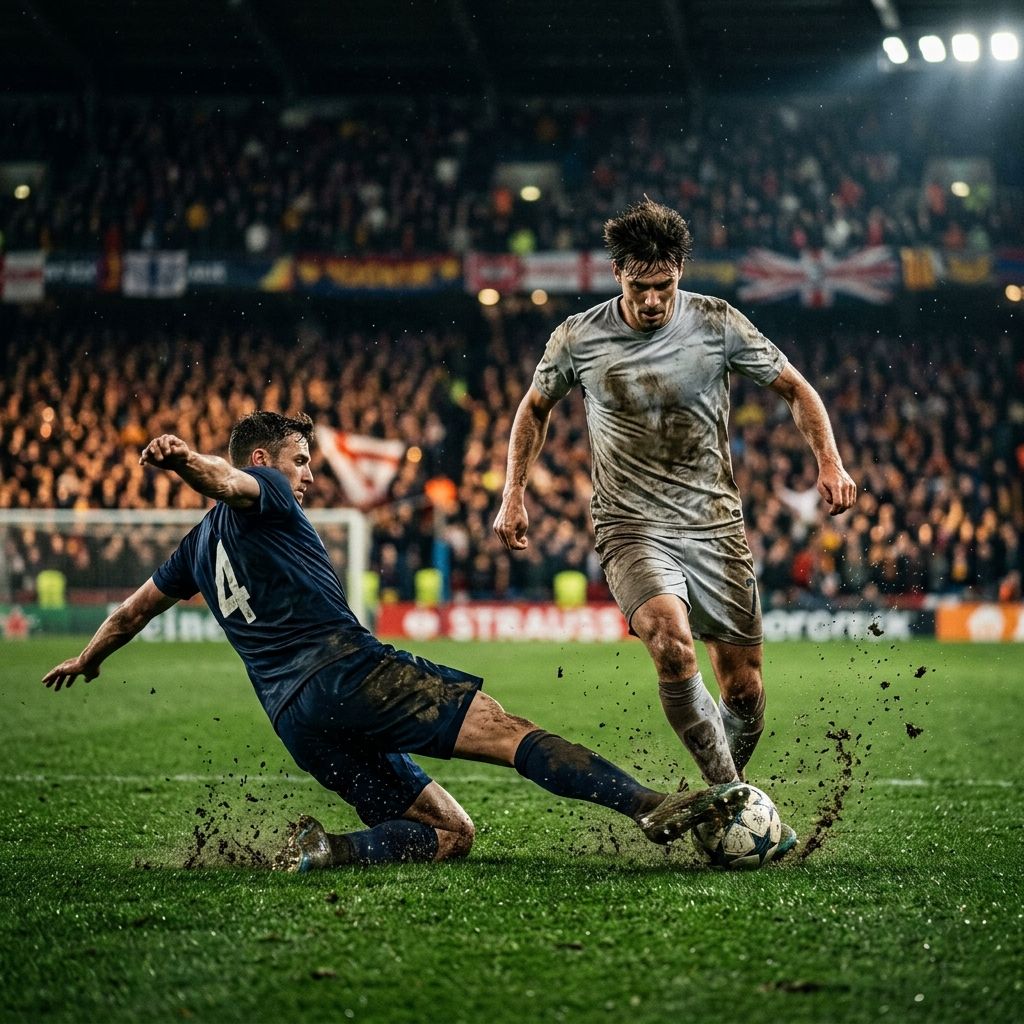
Six consecutive clean sheets. A 650-minute scoreless streak spanning two World Cups. One goal conceded in 630 minutes of play. These are not numbers a team achieves by defending deep and absorbing pressure. Spain doesn’t defend like Italy in 2006 or Greece in 2004. Spain defends by never giving you the ball.
Rodri is the mechanism. His 655 completed passes and 919 high-intensity runs — both tournament-leading figures — reveal the shape of Spain’s defensive strategy: press high, win the ball early, and recycle possession until the opponent’s structure breaks down. Spain doesn’t protect a lead by sitting in a low block. They protect it by playing another 15-pass sequence that runs 45 seconds off the clock and forces the opponent to defend when they’re supposed to be attacking.
This is what makes the final fascinating. Argentina has not faced a team that plays this way at this level. Belgium scored. Nobody else did. And Belgium’s goal came from a counter-attack — one of the few moments Spain lost their structural shape all tournament.
Argentina’s Attack: Messi by the Numbers
Now put Lionel Messi’s tournament next to those defensive numbers:
- 8 goals — tournament-leading, likely Golden Boot winner
- 4 assists — 12 total goal contributions in 7 matches
- 25 chances created — more than any player in the competition
- 8 big chances created — also tournament-leading
- 22 successful dribbles
- 21 career World Cup goals — most in the tournament’s history
He scored in each of Argentina’s first five games. He has scored against 15 different nations across his World Cup career. At 39, in what is almost certainly his final tournament, Messi is having the most individually prolific World Cup any player has ever had.
Argentina as a team has scored 19 goals, averaging 2.71 per game. They beat England in a dramatic semi-final. Their midfield — Enzo Fernández (448 passes) and Leandro Paredes (496 passes) — provides the platform, while Alexis Mac Allister leads the team with 19 tackles, anchoring the defensive transition.
But here’s the question no preview is asking precisely enough: how many of Argentina’s 19 goals came from sustained possession sequences, and how many came from transitions, set pieces, or individual Messi brilliance?
If Argentina’s goals are disproportionately transition-based — and Messi’s chance-creation profile suggests they are, given his dribble-and-create style — then Spain’s possession-defense is the worst possible matchup. You can’t counter-attack a team that rarely gives the ball away. You can’t create transitions against a team that maintains structural shape across 60%+ possession.
The Rodri Question: Can One Midfielder Neutralize the Greatest Attacker Alive?
Spain’s defensive architecture routes through Rodri. He is the metronome who sets the pressing rhythm, the shield who covers the center-backs during transitions, and the recycler who turns defensive recoveries into sustained possession.
Against France in the semi-final, Rodri completed 86 passes with a 94% accuracy rate while also making 5 tackles. He didn’t just control the tempo — he made it impossible for Kylian Mbappé to find space in transition. France created virtually nothing from open play.
Sunday asks whether the same approach can work against Messi. The distinction matters: Mbappé needs space to be devastating. He’s a transition attacker who requires the ball delivered into open field. Messi doesn’t need space. He creates it himself. He can receive the ball in a phone booth, shift his weight, and thread a pass that splits two defenders. Rodri can suppress Mbappé by denying transition opportunities. Can he suppress Messi when Messi only needs the ball for two seconds to change the game?
Argentina’s coach Lionel Scaloni has noted tactical similarities between his side and Spain’s philosophy, emphasizing a match that is highly anticipated for its technical and strategic depth. — FIFA.com
Scaloni sees the mirror. Both teams want possession. Both teams press high. But Spain does it better defensively (1 goal conceded vs. Argentina’s 2), and Argentina does it better offensively (19 goals vs. Spain’s 12, with Mikel Oyarzabal leading Spain on just 5). The final will be decided by which imbalance matters more.
Opta’s Model and the Market: What the Probabilities Say
The Opta supercomputer gives Spain a 59.46% probability of winning the title, compared to 40.54% for Argentina. That’s a meaningful edge but not a decisive one — roughly equivalent to a home-field advantage in a league match.
What makes this spread interesting is why the model favors Spain. Probabilistic models weight defensive consistency heavily in knockout-stage predictions because goals conceded correlates more reliably with tournament advancement than goals scored. A team that concedes 1 goal in 7 matches has a narrower variance band than a team that scores 19 — because defensive structure is more repeatable than attacking brilliance. On any given day, Messi might score a hat trick or he might be marked out of the game. But Spain’s defensive system is unlikely to suddenly concede four.
Where PickViz Sees Value
At PickViz, we analyze possession-adjusted defensive metrics to identify where traditional markets undervalue structural advantages. In this final, the model says: Spain’s under-1.5-goals-conceded probability is among the highest we’ve tracked in any major final. The market has priced some of this in, but not all of it — particularly in corners and shots-on-target prop markets, where Spain’s possession dominance suppresses those numbers for the opponent more aggressively than the public expects. Our visual matchup models map these probabilities in real time against moving lines.
The Verdict: Structure vs. Genius
This final reduces to a clean question: can Argentina generate enough moments of individual brilliance to break a defensive structure that has conceded once in 630 minutes?
Spain doesn’t need to stop Messi for 90 minutes. They need to limit the number of times he receives the ball in dangerous areas. If Rodri controls the middle third and Spain maintain 60%+ possession, Messi might touch the ball 40 times instead of 60. He might create two big chances instead of four. In a one-goal game — and Spain’s tournament profile screams 1-0 or 2-1 — that reduction in volume is the difference.
Argentina’s path is equally clear: they need to find transition moments against a team that doesn’t give them. They need Enzo Fernández and Paredes to match Rodri’s midfield control. And they need Messi to do what he does — receive the ball in an impossible situation and turn it into a goal anyway.
History favors the defense. Of the eight World Cup Finals decided by one goal since 1990, six were won by the team that conceded fewer goals throughout the tournament. Spain fits that profile exactly.
But history has also never accounted for a 39-year-old playing the best World Cup of anyone’s career. Messi’s 8 goals and 25 chances created exist outside any predictive model. The data says Spain. The human variable says: watch Messi.
Frequently Asked Questions
What time is the World Cup Final 2026?
The Spain vs Argentina World Cup Final kicks off at 3:00 PM ET on Sunday, July 19, 2026, at MetLife Stadium (New York/New Jersey Stadium) in East Rutherford, NJ. It will be broadcast on FOX, Telemundo, and Peacock in the United States.
How many goals has Messi scored in the 2026 World Cup?
Messi has scored 8 goals and provided 4 assists (12 total goal contributions) through seven matches at the 2026 World Cup, making him the tournament’s leading scorer and the all-time World Cup goals leader with 21 career goals.
What is Spain’s defensive record at the 2026 World Cup?
Spain has conceded just 1 goal in 7 matches — a Charles De Ketelaere strike in the 41st minute of the quarter-final against Belgium. Goalkeeper Unai Simón set a new World Cup record with a 650-minute scoreless streak, surpassing Walter Zenga’s 517-minute mark from 1990.