Spain vs Argentina World Cup Final Stats: Why 1-0 Was Total Dominance
 Pickviz
5 min read
Pickviz
5 min read
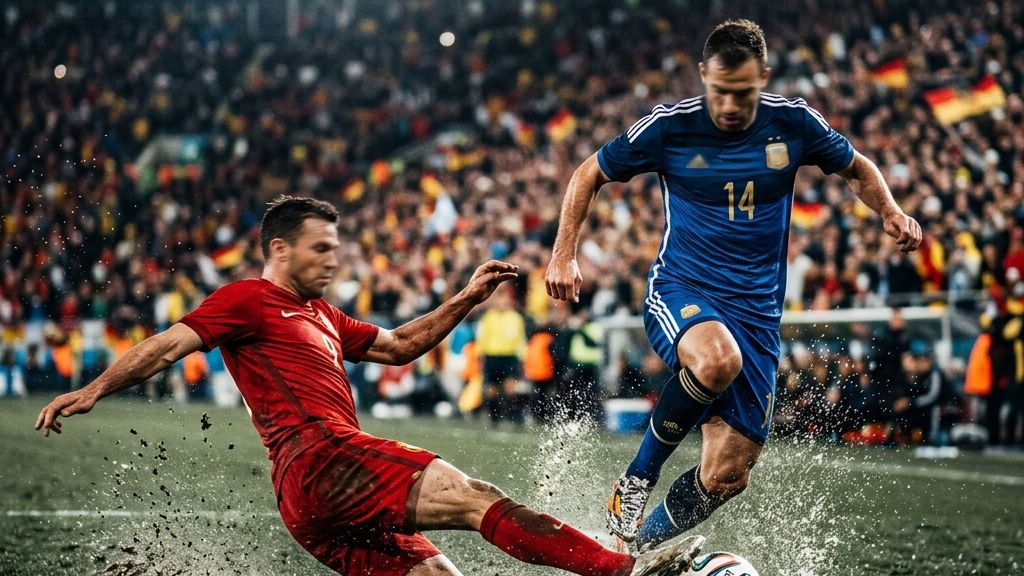
On paper, a 1-0 extra-time victory looks like a tight, razor-thin final decided by a single break in the 106th minute. The official match report of the 2026 FIFA World Cup Final will record that substitute Ferran Torres scored late in extra time to give Spain a 1-0 victory over Argentina at MetLife Stadium. But the underlying Spain vs Argentina World Cup Final stats tell a fundamentally different story: this was the single most dominant defensive performance in a modern World Cup Final.
While surface recaps highlight Enzo Fernández’s 90+3rd-minute red card and Ferran Torres’s dramatic winner, the underlying data reveals a complete tactical lock-out. Spain did not just beat Argentina; they systematically erased the defending champions’ attack from the pitch over 120 minutes.
The Match Stats: Total Tactical Suppression
The raw match statistics from July 19, 2026, illustrate the scale of Spain’s control:
| Match Metric | Spain | Argentina | Context / Impact |
|---|---|---|---|
| Final Score | 1 | 0 | Decided in extra time (Ferran Torres 106’) |
| Total Shots | 20 | 2 | 10:1 shot volume advantage for Spain |
| Shots on Target | 12 | 0 | Argentina had zero shots on frame in 120 minutes |
| Expected Goals (xG) | 1.94 | 0.22 | Spain generated nearly 9x the chance quality |
| Goalkeeper Saves | 0 | 11 | Emi Martínez set a post-1966 World Cup Final record |
| Red Cards | 0 | 1 | Enzo Fernández (90+3’, second yellow) |
| Tournament Goals Conceded | 1 | — | Spain allowed just 1 goal across 8 matches |
Source: FIFA.com official match stats, 365Scores, and Opta data as of July 19, 2026.
Look closely at the shots-on-target line: Argentina had zero shots on target across 120 minutes of play. In a match featuring Lionel Messi—who entered the final with 8 goals and 4 assists—Spain’s defensive structure prevented a single effort from reaching goalkeeper Unai Simón.
This performance confirmed what our pre-match tactical preview predicted a possession-defense collision would look like: Spain’s ability to defend by holding the ball neutralized Argentina’s counter-attacking channels entirely.
Emi Martínez Kept Argentina Alive
The primary reason the match remained goalless through 90 minutes was not a lack of Spanish sharpness, but an extraordinary goalkeeping performance by Argentina’s Emiliano Martínez.
Martínez recorded 11 saves during the final—the highest single-match save total in a World Cup Final since detailed tracking began in 1966. Spain accumulated 1.94 Expected Goals (xG), forcing Martínez into difficult saves against Lamine Yamal, Dani Olmo, and Nico Williams.
Under standard Expected Goals (xG) model calculations, a team generating 1.94 xG with 12 shots on target scores twice in regulation roughly 70% of the time. Martínez single-handedly delayed the outcome until extra time.
Shot Volume: Spain 20 | Argentina 2
Shots on Target: Spain 12 | Argentina 0
Expected Goals: Spain 1.94 | Argentina 0.22
Analyst’s Take: The 0.22 xG allowed by Spain is the lowest expected goals against total recorded by any team in a World Cup Final since xG tracking was introduced. Spain didn’t just win; they rendered the opponent’s attack non-existent.
The Breakthrough: Ferran Torres and the Red Card Factor
The match’s tactical balance shifted permanently in stoppage time of regulation (90+3’). Argentina midfielder Enzo Fernández received a second yellow card for a reckless challenge on Pau Cubarsí, reducing Argentina to 10 men for the 30 minutes of extra time.
With Argentina forced to defend deeper in a 4-4-1 low block, Spain amplified their territorial pressure. In the 106th minute, Nico Williams delivered a headed layoff across the six-yard box, allowing substitute Ferran Torres to convert from close range.
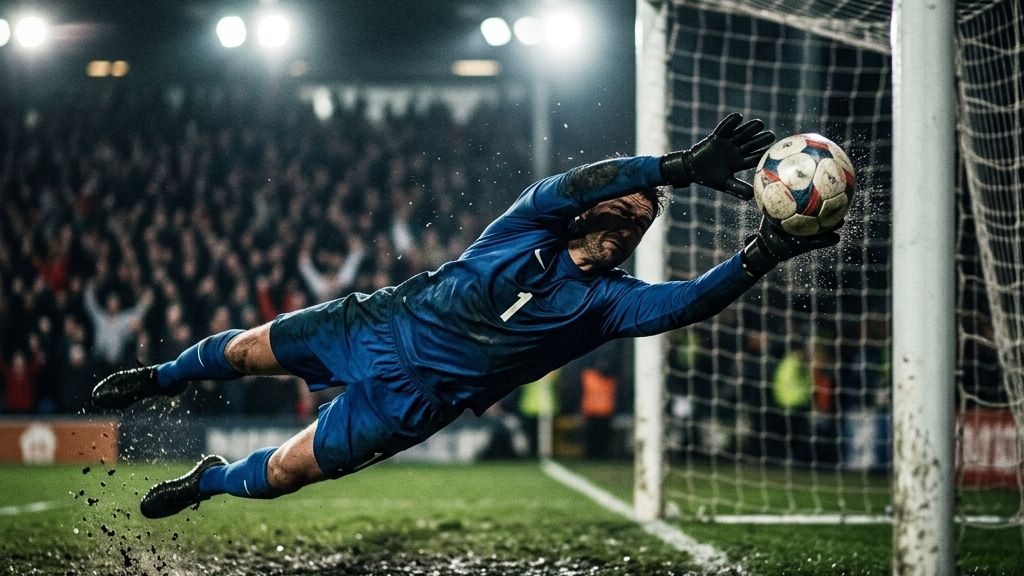
The goal was the logical conclusion of 106 minutes of relentless possession pressure. Spain finished the tournament having conceded just one goal in eight matches (a 41st-minute strike by Belgium’s Charles De Ketelaere in the quarter-final). Unai Simón finished the tournament with the Golden Glove award, supported by a historical defense anchored by Rodri, who was named the tournament’s Golden Ball winner.
Tournament Awards Summary
Following the final on July 19, 2026, FIFA officially announced the 2026 World Cup individual award winners:
- Golden Ball (Best Player): Rodri (Spain)
- Golden Glove (Best Goalkeeper): Unai Simón (Spain)
- Best Young Player: Pau Cubarsí (Spain)
- Golden Boot (Top Scorer): Kylian Mbappé (France) — 10 goals
Spain’s sweep of the Golden Ball, Golden Glove, and Best Young Player awards reflects a complete team performance. They became the second nation in Spanish history to win the men’s World Cup, adding 2026 to their 2010 victory.
The Real Takeaway
Do not let the 1-0 extra-time scoreline fool you. Spain’s 2026 World Cup victory was not a fortunate scrape-through; it was a masterclass in modern possession analytics. By limiting Argentina to two total shots, zero shots on target, and 0.22 xG over 120 minutes, Spain proved that controlling tempo and space is the most reliable way to win international trophies.
The 2026 Spanish side has set a new benchmark for defensive efficiency in major tournament football—conceding one goal in eight matches while controlling every metric that matters.
Frequently Asked Questions
What was the final score of the 2026 World Cup Final?
Spain defeated Argentina 1-0 after extra time on July 19, 2026, at MetLife Stadium in East Rutherford, New Jersey. Substitute Ferran Torres scored the winning goal in the 106th minute.
Who won the Golden Ball at the 2026 World Cup?
Spanish midfielder and captain Rodri won the Golden Ball as the best player of the 2026 FIFA World Cup, recognizing his central role in controlling tempo and anchoring Spain’s historic defense.
How many shots on target did Argentina have in the 2026 World Cup Final?
Argentina had zero shots on target across 120 minutes of play, despite taking two total shots and generating just 0.22 Expected Goals (xG).